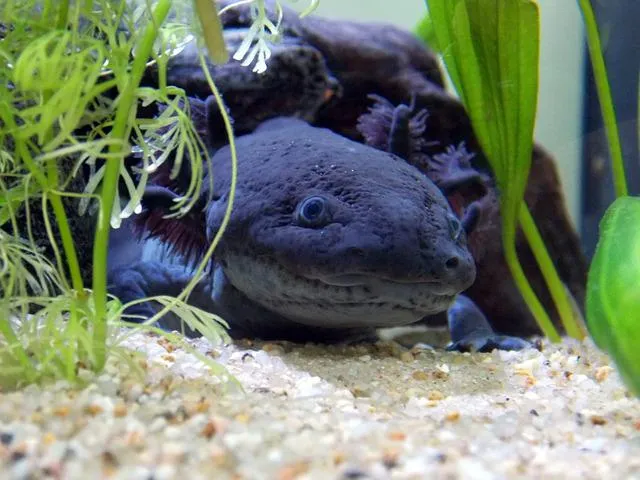
Axolotls are aquatic salamanders, not fish or lizards. Set up and test their aquarium before bringing one home, and identify a vet experienced with amphibians.
Housing and furnishings
For a first setup, plan for one axolotl. The Royal Veterinary College says they are best housed alone because sharing carries risks. Choose a long, wide aquarium with room for the adult animal, not a container sized for a juvenile. The sources checked do not establish one universal minimum volume for every setup; confirm the adult footprint and filtration plan before purchase.
Provide secure cover, sheltered resting places and gentle water flow. Avoid stones or decorations small enough to swallow. Substrate selection needs to account for the animal’s size and feeding behaviour; gravel is not a safe default.
Keep the water cool and tested
The Royal Veterinary College gives 16–18°C as an optimum temperature. OATA lists a broader 10–22°C guide range for axolotls; that is not a reason to aim for the warm end or allow large fluctuations. Plan how the tank will stay cool in summer and monitor it with a thermometer.
Establish biological filtration before adding the animal. Check ammonia and nitrite, aiming for zero, and monitor pH and nitrate. Use suitable conditioner for replacement tap water, accounting for chlorine and chloramine. Test regularly, remove waste and make partial water changes appropriate to results. Clear water is not evidence of safe chemistry.
A carnivorous diet
Use appropriate animal-based food and suitable prepared pellets, not fruit or vegetables as treats. Veterinary examples include earthworms and other suitable invertebrate foods. Food size, quantity and frequency must match age and condition. Remove uneaten food rather than letting it decay.
Observe rather than handle
Minimise handling. Changes in appetite, buoyancy, skin, gills or normal behaviour need an environmental check and veterinary advice. Do not infer that a fish remedy, or a reduced fish dose, is automatically safe for an amphibian.
Sources checked
- Royal Veterinary College: Axolotl care, reviewed December 2024
- VCA Animal Hospitals: Axolotls as pets
- OATA: Axolotls and aquatic frogs
Guide copy checked on 2026-11-08. This is a source-based editorial review, not independent veterinary review.