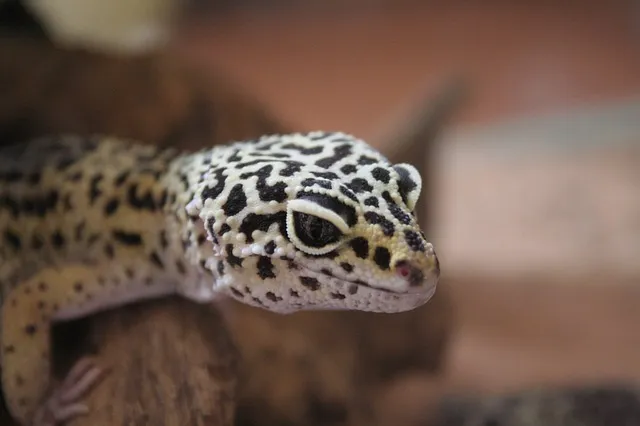
Leopard geckos need a planned environment, not simply a warm box. Arrange access to a reptile-experienced vet and establish the enclosure’s conditions before buying or adopting the animal.
Room to move
The Royal Veterinary College recommends an enclosure at least 36 × 18 × 18 inches—approximately 91 × 46 × 46 cm. This guide uses that larger planning reference rather than the smaller enclosure in the RSPCA sheet; it is not a claim that every care authority agrees on one minimum. Provide ventilation, a secure lid and more space where possible. Keep a leopard gecko singly.
Warm, cool and humid retreats
Supply sheltered places at different temperatures, plus a separate humid hide containing a suitable damp material. A humid hide creates a local retreat; it does not mean keeping the entire enclosure wet.
Use thermostatic control, guarded heat and independent measurements. The sources checked describe different basking targets without fully resolving surface-versus-air measurement. Agree a coherent plan with a reptile vet, including where each probe belongs. Do not combine a surface reading from one guide with an air target from another.
Provide species-appropriate UVB with accessible shade, following the fixture’s distance and replacement instructions.
Feeding and substrate
Feed a variety of appropriate invertebrates, gut-loaded before feeding, with a suitable supplementation plan. Remove uneaten insects and supply fresh water. Lettuce is not a substitute for an insect-based diet.
Choose a substrate for the animal’s age, health and setup. Simple paper can help with short-term monitoring; a permanent enclosure should also permit natural behaviour. Do not treat every loose substrate as interchangeable.
Handling and health
Support the whole body and never grab the tail. Check appetite, droppings, weight and shedding. Seek veterinary advice for retained shed, injury, weight loss or unusual movement, rather than trying a home treatment.
Sources checked
- Royal Veterinary College: Leopard gecko care, reviewed December2024
- RSPCA: Caring for your leopard gecko
Replacement copy checked on 2026-11-08. This is a source-based editorial review, not independent veterinary review.