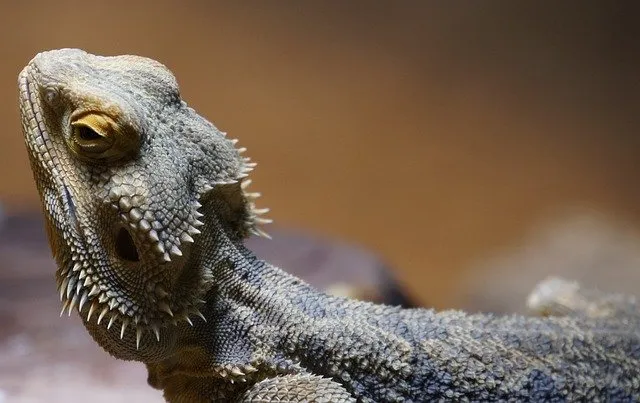
This guide concerns the central bearded dragon, Pogona vitticeps. Prepare and test the enclosure before bringing the animal home; buying a lamp and setting a thermostat does not, by itself, verify the environment.
Space and security
For an adult, the RSPCA specifies an enclosure at least 120 cm long, 60 cm wide and 60 cm high. Treat that as a starting reference, with more space where possible. Provide secure climbing structures, accessible shelter and ventilation. Plan to keep one dragon rather than assume that two will share peacefully.
Heat and UVB
Create a warm basking area and a cooler retreat. Guard heat sources and use suitable thermostatic control. Measure conditions independently: a thermostat setting is not a temperature reading. Ask a reptile-experienced vet to check the setup and specify which temperatures should be measured at the surface and in the air.
Provide appropriate UVB and a shaded escape area. Follow the lamp maker’s installation distance and replacement instructions. Do not select equipment by wattage or UVB percentage alone.
Food and water
Offer suitable leafy greens and appropriately sized feeder insects. Growing dragons need a different balance from adults; the Royal Veterinary College advises less live food as dragons mature. Gut-load feeder insects and agree a calcium/vitamin plan with a reptile vet rather than adding products indiscriminately. Provide clean drinking water.
Daily care
Check the animal, water, environmental readings and waste each day. Keep furnishings stable and wash your hands after handling or cleaning. Persistent appetite changes, weight loss, weakness, abnormal movement or breathing warrant veterinary advice. Do not assume that an unwell or inactive dragon is simply entering brumation.
Sources checked
- RSPCA: Caring for your bearded dragon
- Royal Veterinary College: Bearded dragon care, reviewed December2024
- VCA: Brumation in bearded dragons
Replacement copy checked on 2026-11-08. This is a source-based editorial review, not independent veterinary review.